The Story
Submitted on 27 September 2026 to Swim Press for the Decay journal. I wrote Joan specifically for this journal and thought it nailed the brief. The story is about decay in the most literal sense: a body returning to the soil, but also about the slow decomposition of memory, self-blame and the stories we often build to make sense of what was done to us. Carnforth is not terribly far from my home town and the Pepperpot is a real landmark, so the setting felt personal and grounded in a way that I thought would carry the piece.
It was rejected with a form response. I was disappointed because the story was highly specific to the brief and therefore does not lend itself too readily to existing markets. My genre is notoriously difficult to find a home for, but I like Joan. It is very unsettling.
The lesson here is to be prepared for disappointment when you are interpreting an unknown editor’s theme. One other thing worth noting is that offering paid manuscript feedback services to the very writers you have just rejected is not a great look in my view. If the work is rejected then the feedback cannot be dispassionate, can it? By definition. Do leave a comment.
The Rejection
Submitted to Swim Press on 27 September 2026 for the Decay journal. This was the only submission of the story.
Rejected · Swim Press
Good afternoon,
Thank you so much for your submission to Swim Press. Unfortunately on this occasion we have decided not to accept your submission for publication.
We offer a feedback service which can be found at this link on our website: https://swim-press.co.uk/feedback/. Should this be of interest to you please follow the guidelines found on the website and we will be happy to provide feedback on your work soon.
Thank you again for your interest in Swim Press and your continued support of our press, we appreciate all the love, and we hope to hear from you again in the future.
Best,
Swim Press x
Listen — Narrated Version
Joan
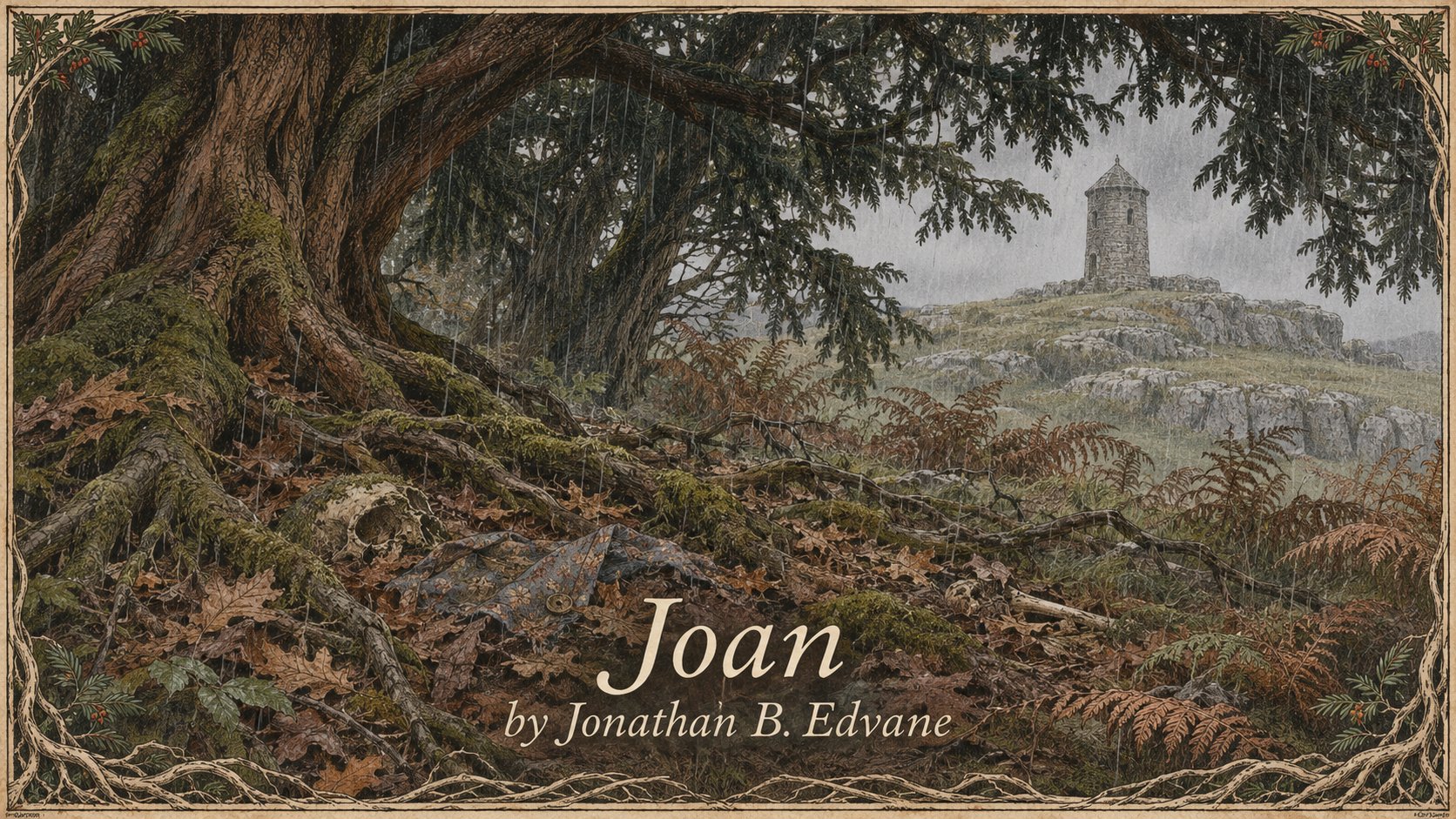
I know the rain before it reaches me. It gathers first in the yews, then falls through in cold drops that strike the leaves above my face and drain slowly into the earth. The soil is deeper than it was. Roots have gone through me and around me. Beneath everything lies the pale limestone, holding the wood up against the hill.
I have been here a long time. It feels like yesterday.
That night Carnforth lay below me, all roofs and chimneys and scattered lamps, and beyond it there was only darkness where the bay ought to have been. I climbed because I could not bear the town any longer. Every street knew me. Every window seemed to know what had happened. I thought people could see it in the way I walked.
He had done it once. That was enough.
I had told nobody. I meant never to tell anybody, but my brother found me crying and would not leave it alone. I remember his face when I finally said what the man had done. I remember wishing that I could pull the words back inside me.
My brother took a gun and killed him.
After that I could see the whole thing laid out behind me like footprints in mud. If I had not gone there. If I had not let him near me. If I had kept my mouth shut. A man would still be alive and my brother would not have blood on his hands. So I walked, and then I climbed.
The Pepperpot was black against the night sky. Wind pushed at me while I stood at the top. I thought falling would be simple. It was not. My ankle broke when I struck the ground. I heard it go. Then my head hit the ground and the world flashed white. I lay there trying to breathe, one shoe gone, my stocking wet against the cold earth.
Absurdly, I called for my brother. There was a shape above me at the top of the tower. Or did I imagine it?
I dragged myself towards the trees. Every movement sent something hot and sickening through my leg. Bracken tore at my hands. Roots caught my dress. I crawled until the Pepperpot disappeared behind the leaves.
My brother must have come looking. That was what I believed when I closed my eyes.
Time did not pass for me in days. It came in weather. Rain pressed through the leaves and softened the earth around me. Frost tightened everything until even the roots seemed to hold still. In spring the ground loosened again and small things moved through it. Beetles, worms, pale roots seeking water. Summer warmed the soil and filled the wood with flies and birdsong. Then autumn came and laid another skin over me. Leaves settled, rotted and darkened until I stopped knowing where the earth ended and I began.
At first I counted seasons. I thought each winter might be the last before somebody came. My brother would be searching. He would have gone back to the Pepperpot and found my shoe missing. He would have followed the broken bracken and the marks I had made dragging myself into the wood. I imagined him calling my name until his voice went hoarse. Sometimes I thought I heard him, though it was only men on the path or boys shouting beyond.
Years widened around me. Horses became less common on the road and engines multiplied. Their sound changed too, from a harsh coughing rattle to something smoother and faster. For a time the sky often trembled. Aircraft passed overhead in numbers I had never known before, their engines rolling through the darkness while the branches shivered overhead. Once there were distant sirens. Another time men came through the wood and one wore a uniform. I wanted to ask what year it was. I wanted to know whether my mother still lived, whether she had kept my clothes, whether she still expected the door to open.
That wanting dulled over time. I could remember my mother’s hands clearly at first, reddened from hot water and washing powder, but eventually I could not see her face without effort. I remembered the kitchen better than I remembered her. The chipped basin, the damp coats, the ticking clock above the mantel. Memory kept the things but loosened its hold on the people.
The wood grew around me without concern. Roots passed through the place where my dress had been. Moss spread over stones. Saplings thickened into trees. Rain soaked into me as easily as it soaked into everything else. Sometimes I felt that I had spread beneath the whole wood, aware of every footstep and every drop of water. At other times I was small again, eighteen years old, lying there with one stockinged foot and blood drying in my hair.
Children came and went. Dogs nosed among the ferns. Clothes changed. Voices changed. People carried little machines that rang, and later machines they spoke into while walking alone. None of them knew I was there.
Through all of it I kept my brother with me. I imagined him growing old, first with grey in his hair, then a stoop in his shoulders. I gave him regret. I gave him prayers. I gave him nights when he woke believing he had heard me calling from the wood.
My brother loved me. He had killed for me. He had searched for me.
◆ ◆ ◆
The day he came was quiet after rain, the wood holding water in every hollow and fold of leaf, and I somehow knew his footsteps. People had passed above me for years without touching anything in me beyond the dull awareness of company, but this tread was different. It was slow and uneven now, yet something in its rhythm reached through all the seasons that had gathered over me. He climbed with effort, stopped often for breath, then left the path and came beneath the yews without searching.
At first I thought the wood had deceived me. The man I remembered had been young and broad through the shoulders, quick in his movements, with dark hair and hands that never seemed still. This man was bent, his coat hanging loosely from him, his face narrowed by age until almost nothing of the brother I knew remained. Even so, I knew him. Recognition came from the old arrangement of his body, the way he favoured one side when the ground sloped and from the small turn of his head before stepping over a root. My brother had grown old while I lay beneath the trees. Very old.
I told myself he had come at last. He had searched all those years. He had carried me with him through marriage, work, winter mornings, Sunday dinners, funerals and all the ordinary things I had been denied. Grief had finally brought him back to the place where he lost me, and the thought rose through me with such force that I almost forgot the one thing I should have noticed first.
He knew exactly where I was.
There was no searching among the trees, no uncertainty, no pause to remember. He came straight to me and stood above the place where my bones had long since become part of the dark beneath him. After a while he reached inside his coat and took out something wrapped in old cloth. When he opened it, I saw the shoe. The leather had dried and curled inward, and the buckle was brown with rust, but I knew it at once. I remembered the stone under my bare stocking, the torn edge of my dress, the pain in my ankle as I dragged myself towards the trees. I had lost that shoe at the foot of the Pepperpot.
My brother had picked it up.
He lowered himself with difficulty and placed it on the ground beside me. Then he looked down for a long while and shook his head and said, “Joan,” as though confirming a thing already known. There was no grief in it that I could hear. No apology. No question. After a moment he muttered, “Well then,” and went back the way he had come.
Then the silence of that night returned to me. The memory opened slowly, each part making room for the next, until there was nowhere left for the story to hide. I saw the Pepperpot above me again and the dark shape against the sky. I heard my own voice calling and calling for my brother. I remembered waiting for an answer and telling myself that the wind had blown my voice away.
But no. He had heard me. He had seen me move. He had watched me drag myself into the trees, and he had stood there until I was deep enough to disappear.
For all those years I had imagined him searching. I had given him grief because I needed him to have grieved. I had pictured him walking these woods with my name in his mouth, growing older beneath the pain of losing me. I had made his sorrow so carefully that it became more real to me than the night itself. I had blamed myself for leaving him with it. I had believed that what the man did to me had driven my brother to kill, and that my running away had finished what the murder began.
But my brother had gone home.
That thought settled through me with terrible simplicity. He had gone home and eaten and slept. He had woken the next morning and gone on living. The years I had given him in my mind had belonged only to me. His regret, his prayers, his sleepless nights, all of them had been things I invented because I could not bear the truth that he had chosen himself over me.
Something in me loosened.
The man had chosen what he did. My brother had chosen the gun. My brother had chosen the silence on the hill. None of it had begun with me. I had spent all of that time turning other people’s choices into evidence against myself, and suddenly there was nothing left to hold that belief together.
Rain began somewhere beyond the trees and moved towards me. I felt it gather in the yews and fall through the leaves, once more running into the soil that had held me longer than any person ever had. The wood had never asked what I had done. It had never required an explanation. Roots had grown around me. Moss had covered stones. Leaves had fallen and rotted and become earth, and through all of it the ground had kept me without accusation or judgement.
For the first time since I came there, I did not think of my brother.
I thought only of the rain, the dark soil, the weight of the roots, and the great quiet kindness of being allowed to remain.
Discussion