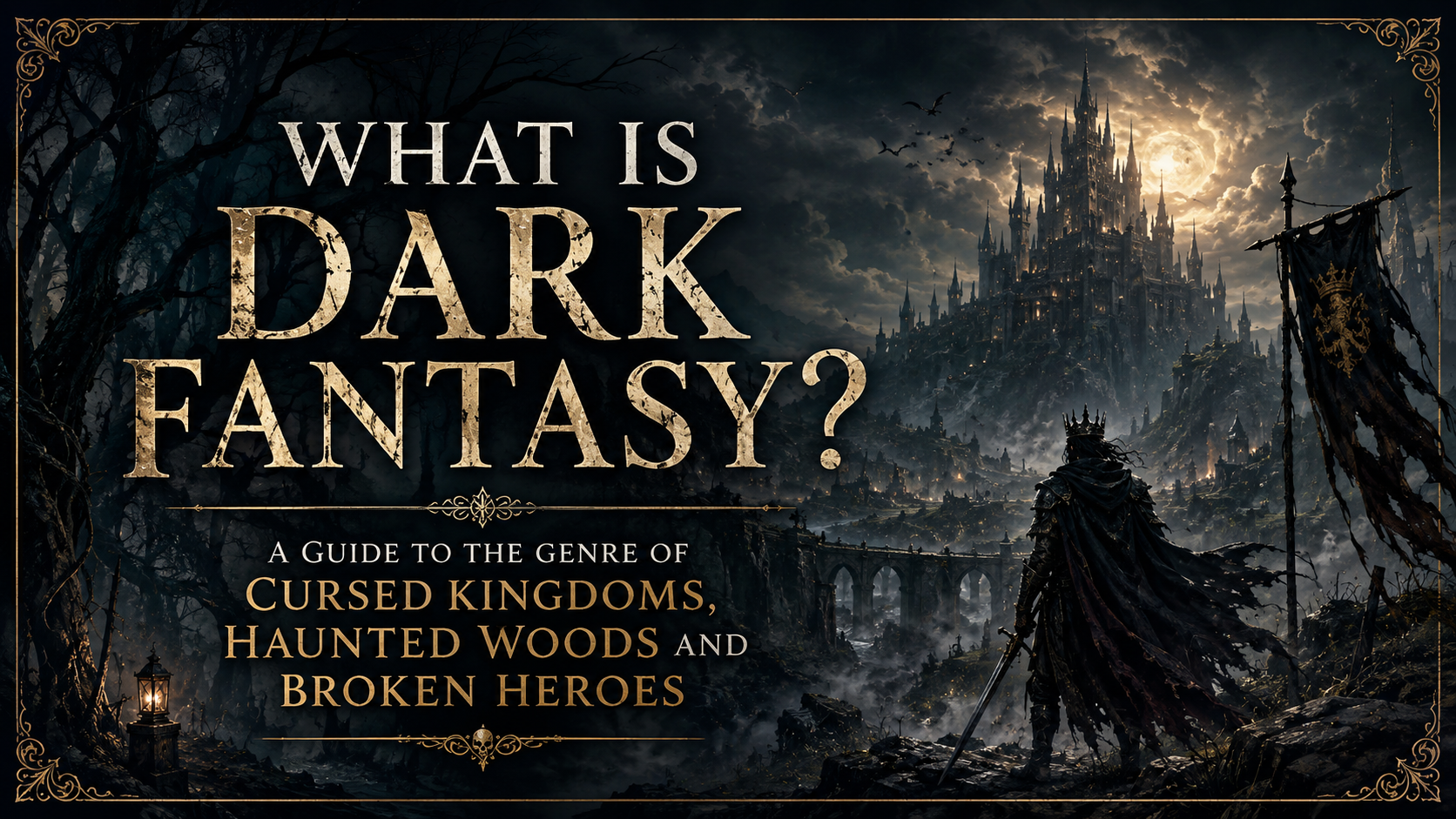
What is dark fantasy?
Dark fantasy is a branch of fantasy that brings horror, dread, moral danger and supernatural unease into imagined worlds.
It still belongs to fantasy. There may be magic, gods, monsters, curses, old kingdoms, strange forests, haunted roads, relics, witches, demons or dead things that refuse to stay buried. But the mood is darker than heroic fantasy. The world does not feel safe. Power usually has a cost. Good people may fail. Monsters may be pitiable. Heroes may be compromised. Victory, when it comes, is rarely clean.
A simple dark fantasy definition would be this:
Dark fantasy is fantasy where the wonder is shadowed by fear, corruption, tragedy or horror.
That does not mean every dark fantasy story must be bleak from beginning to end. The best dark fantasy often works because beauty and terror sit beside one another. A moonlit forest may be enchanting and dangerous. A spell may save a village and damn the person who cast it. A knight may be brave, loyal and already lost.
Dark fantasy lives in that tension.
Dark fantasy in plain English
If traditional fantasy asks, “What if magic were real?” dark fantasy asks, “What would magic cost?”
If heroic fantasy asks, “Can the kingdom be saved?” dark fantasy asks, “What will be left of the people who save it?”
If horror asks, “What is hiding in the dark?” dark fantasy asks, “What if the dark has a kingdom, a history and a claim?”
That is the heart of the genre. It is not simply fantasy with blood added. It is not just horror with swords. Dark fantasy is about enchantment under pressure. It is about magic that frightens as much as it dazzles.
What makes a story dark fantasy?
Dark fantasy can take many forms, but most stories in the genre include several of the following features.
A world where magic is dangerous
In lighter fantasy, magic may be a tool, a gift or a source of wonder. In dark fantasy, magic is more often a bargain. It leaves marks. It asks for blood, memory, innocence, sanity, years of life or the soul’s slow surrender.
A healing charm may save a child but bind the healer to something old beneath the hill. A sword may protect its bearer but hunger for names. A prophecy may be true and still be cruel.
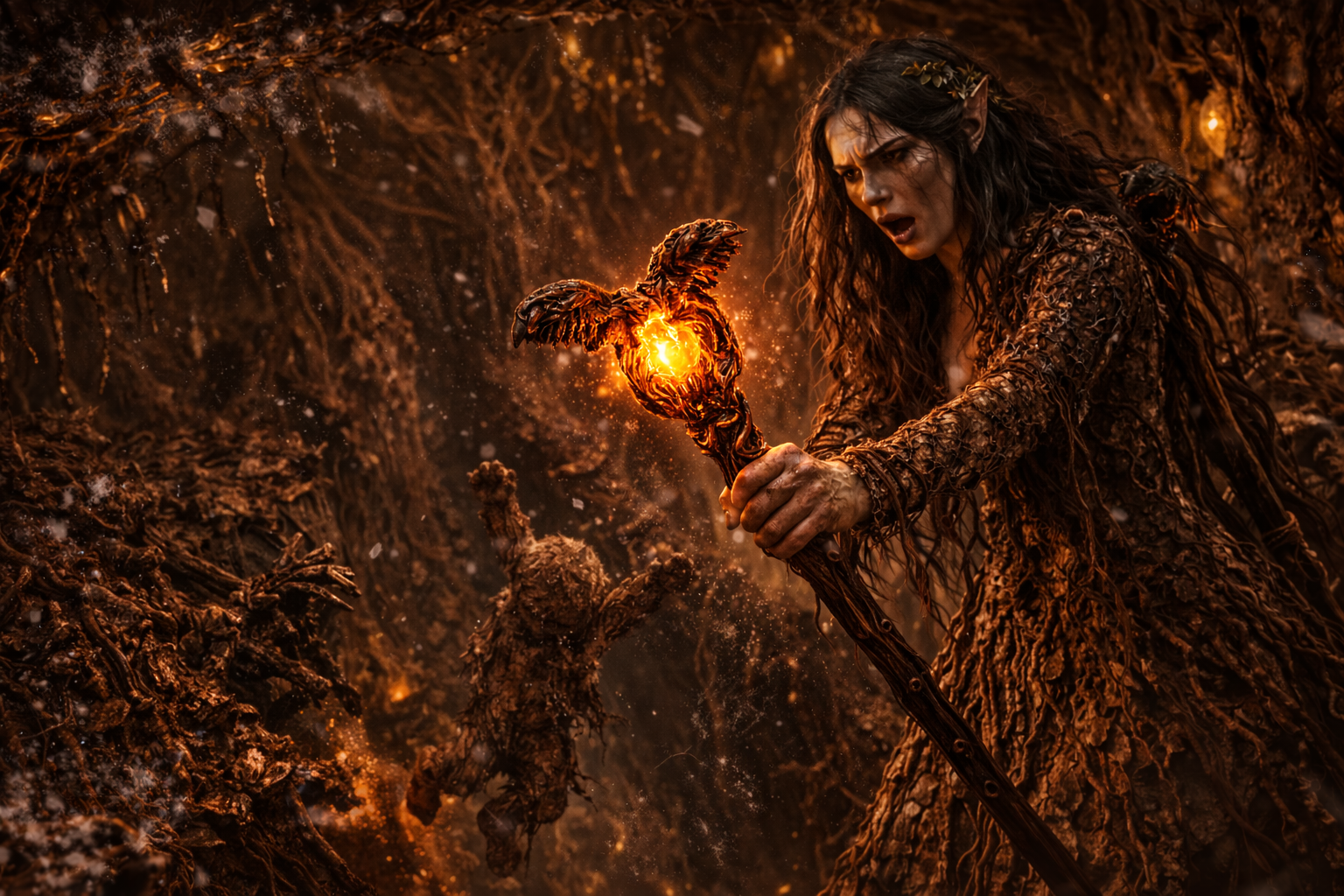
I have written a tale in exactly this register. In The Dryad's Folly, a guardian carries a staff that mends collapsing tunnels the moment she fears for anyone beneath them. It never asks for blood or gold. It takes her beauty in increments so small she can talk herself out of noticing, until the day it decides two lives are a fair price for a repair. The bargain was never refused. It was fed.
Dark fantasy does not remove wonder from magic. It makes wonder dangerous.
Morally grey characters
Dark fantasy often avoids simple battles between pure good and obvious evil. Its characters may be brave and selfish at the same time. They may do cruel things for loyal reasons. They may protect one person while betraying another.
The protagonist might be a monster, a witch, an assassin, a fallen knight, a cursed ruler or an ordinary person forced into an impossible choice. Even when the story has villains, the line between guilt and innocence is often blurred.
This is one reason readers find dark fantasy so compelling. The characters are not always admirable, but they are recognisably human.
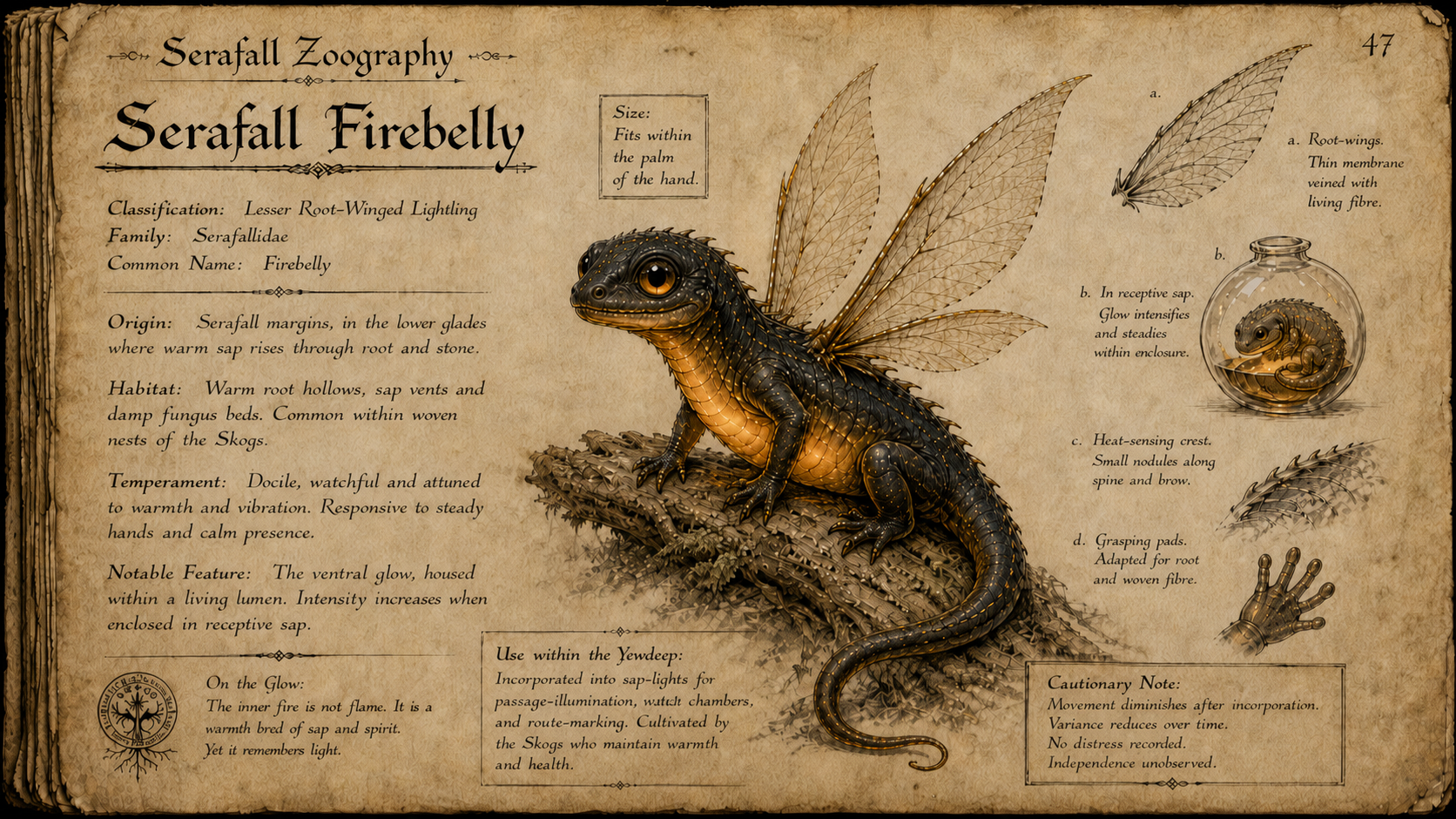
The man at the centre of my own Lights of the Yewdeep is neither hero nor villain. He seals living sprites into the lamps that keep an underground world lit and stable, and he does it with real tenderness, which is the worst of it. He was enslaved once himself. He has become the gentle hand that does the same thing to creatures who do not even know what they have lost.
Horror inside the fantasy world
Dark fantasy uses many of the tools of horror: dread, suspense, decay, body fear, ghosts, demons, revenants, haunted places, curses and the sense that something is wrong long before it shows itself.
The difference is that these elements are woven into a fantasy setting. The monster is not just an intruder. It may belong to the world’s religion, history, politics or landscape. The haunted forest may be part of the map. The curse may be part of the law. The dead may be citizens of their own terrible country.
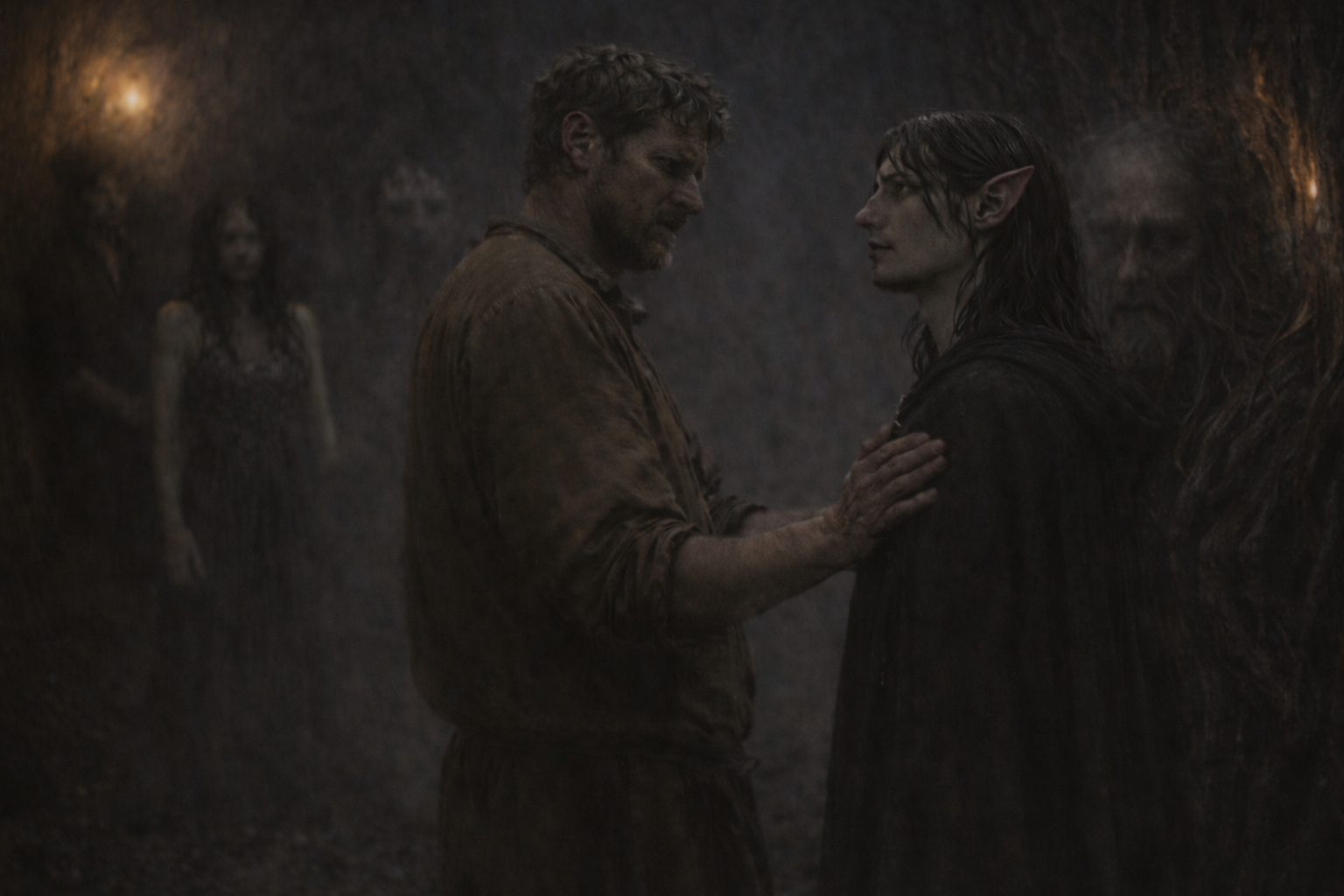
That last line could be the premise of my story The Farewell Chamber. A room grown for partings begins to keep the ghosts of everyone who ever swore to return and never did, holding them in its walls because it cannot understand a promise left unpaid. The haunting belongs to the architecture itself, a place built for mercy doing its work too well.
A tragic or uneasy tone
Dark fantasy is not required to have an unhappy ending, but it often leaves the reader with unease. A kingdom may be saved at a cost. A monster may be killed, only for the hero to become something similar. A curse may be broken, but the years it stole cannot be returned.
The tone is usually serious, atmospheric and morally charged. Even moments of tenderness feel fragile because the world around them is hostile.
Ancient wrongs coming due
Dark fantasy is full of old sins. Buried murders. Broken oaths. Stolen children. Bargains made by ancestors. Gods that were betrayed. Forests that remember. Thrones built on bones.
This gives the genre its weight. The danger is not random. It has roots. Someone did something terrible, and now the bill has arrived.
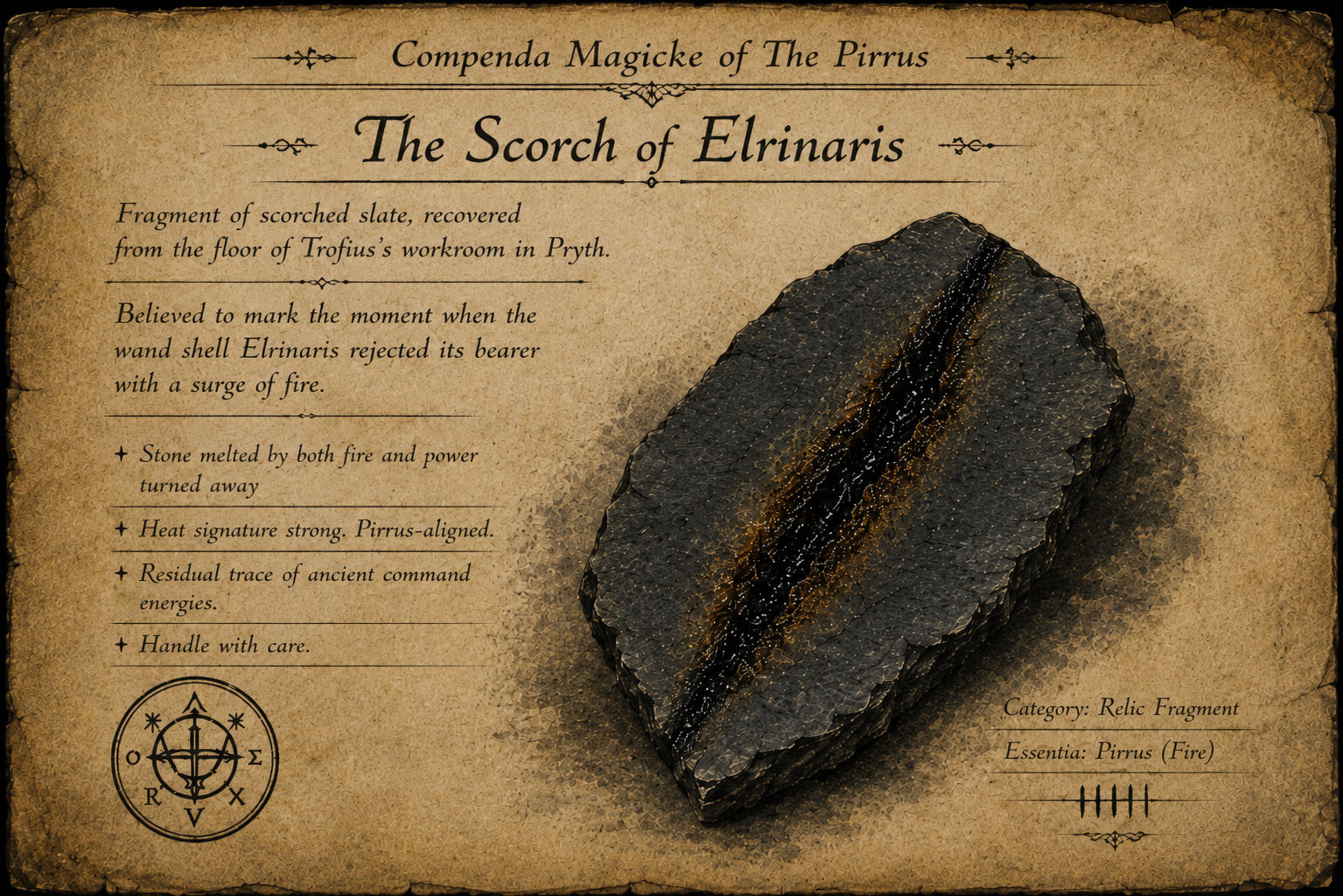
My story Elrinaris turns on this. A teacher buys a rare wand shell for his apprentice and watches it burn her when she speaks the name that wakes it. Only afterward does he understand that the name belongs to a firecaster the Marchlands once tried to scrub from memory, and that the weapon has been waiting, patient and obedient, for a hand worth answering. The bill did not arrive by accident. Someone placed it.
Dark fantasy vs horror
Dark fantasy and horror overlap, but they are not identical.
Horror is built primarily around fear. Its main question is often whether the characters can survive the threat. The supernatural may be mysterious, invasive and unknowable.
Dark fantasy is built around a fantasy world or fantasy logic. Fear is present, but the story also cares about magic systems, kingdoms, myths, quests, curses, bloodlines, gods, relics and the rules of an imagined reality.
A vampire stalking a modern town may be horror. A vampire queen ruling a ruined empire through blood magic may be dark fantasy. A demon haunting a house may be horror. A demon bound into the royal succession of a dying kingdom may be dark fantasy.
The border is not fixed. Many stories belong to both.
Dark fantasy vs grimdark
Dark fantasy and grimdark are often confused, but they are not the same thing.
Grimdark is usually defined by cynicism, brutality, political corruption, moral compromise and the collapse of heroic ideals. It often asks whether honour can survive in a cruel world.
Dark fantasy may include all of that, but its centre is usually more supernatural, uncanny or mythic. It is closer to haunted enchantment than battlefield realism. A grimdark story may be full of warlords, betrayal and mud without much supernatural dread. A dark fantasy story may be quiet, folkloric and eerie, with only a handful of deaths, yet feel far more cursed.
In short:
Grimdark is fantasy with a brutally cynical worldview.
Dark fantasy is fantasy shaped by dread, horror, corruption and the uncanny.
A story can be both, but it does not have to be.
Dark fantasy vs gothic fantasy
Gothic fantasy is another close relative. It often features castles, doomed families, ghosts, forbidden rooms, decaying houses, secret inheritances, obsession and romantic dread.
Dark fantasy is broader. It can be gothic, but it can also be folkloric, epic, mythic, sword-and-sorcery, urban, historical or fairy-tale inspired.
A crumbling castle with a ghost bride is gothic fantasy. A saint’s relic that whispers through a plague town, a forest god demanding children, or a cursed army marching under a dead moon may be dark fantasy without being especially gothic.
Why readers love dark fantasy
Dark fantasy appeals because it treats wonder seriously.
It understands that old stories were not always comforting. Fairy tales had teeth. Folklore was full of bargains, warnings and punishments. Myth was often bloody, strange and unfair. Magic was not a glowing convenience. It was a force you approached carefully, if you approached it at all.
This is the soil my folklore writing grows in, which I dug into in a Dark Hearth post on folklore fantasy and the Bramlick the Brownie tale.
Readers come to dark fantasy for atmosphere, danger and emotional weight. They want beauty with shadow in it. They want monsters that mean something. They want worlds where the past is not dead and the supernatural feels older than human comfort.
Dark fantasy also gives readers complicated characters. It allows for guilt, temptation, sacrifice, vengeance, grief and obsession. It does not insist that every wound can be healed. Sometimes the most powerful ending is not triumph, but recognition.
Common dark fantasy settings
Dark fantasy can appear in almost any setting, but some landscapes suit it particularly well.
Ancient forests work beautifully because they feel alive, watchful and older than human law. Ruined castles and abandoned churches carry the weight of history. Plague villages, borderlands, marshes, mountain passes and dying kingdoms create natural unease. Underground passages, sealed chambers and forgotten shrines suggest that something has been hidden for a reason.
The setting in dark fantasy should not be mere decoration. It should feel morally and spiritually charged. The land should remember. The walls should have heard things. The road should not feel neutral.
The Woldwood, and the Yewdeep grown beneath it, are built on this principle. I set out how in a Dark Hearth post on making a place feel old, cruel and real.
Common dark fantasy creatures and figures
Dark fantasy often uses familiar supernatural figures but gives them a harsher or stranger edge.
Witches are not simply spellcasters. They may be healers, judges, outcasts, tempters or keepers of laws older than the church and crown.
The undead are not just enemies to defeat. They may be witnesses, punishments, messengers or debts walking in human shape.
Fairies and spirits are not cute. They are beautiful, perilous and bound by rules that do not care about human happiness.
Demons are not always red-skinned monsters. They may be legalists, patrons, accusers or old powers wearing familiar faces.
Monsters in dark fantasy are strongest when they reveal something about the world. A creature should not exist only to attack. It should carry meaning.
Examples of dark fantasy books and stories
There is no single approved canon of dark fantasy, because the term has been used in several ways over time. Some readers use it for horror-leaning fantasy. Others use it for fantasy with anti-heroes, cursed worlds or supernatural dread.
Good starting points include:
Between Two Fires by Christopher Buehlman
A medieval journey through plague, faith, monsters and spiritual horror. It is one of the clearest modern examples of dark fantasy because its world feels both historical and apocalyptic.
The Black Company by Glen Cook
A major influence on darker military fantasy, focused on soldiers serving powers that are far from pure.
Elric of Melniboné by Michael Moorcock
A foundational anti-heroic fantasy figure, doomed, aristocratic, powerful, sickly and bound to a soul-drinking sword.
The Book of the New Sun by Gene Wolfe
Strange, difficult and shadowed by death, memory, religion and far-future myth.
The Dark Tower by Stephen King
A hybrid of fantasy, horror, western and quest narrative, with a ruined mythic landscape at its centre.
The Broken Empire trilogy by Mark Lawrence
Often discussed as grimdark, but also useful for readers interested in brutal anti-heroic fantasy.
Coraline by Neil Gaiman
A concise example of dark fantasy for younger readers, built around a parallel world, false comfort and predatory magic.
The Witcher stories by Andrzej Sapkowski
Monster hunting, folklore, political cruelty and moral ambiguity combine throughout the series.
The Sandman by Neil Gaiman
Myth, dream, horror, gods, stories and human frailty merge into one of the most influential dark fantasy works in modern comics.
The Gormenghast books by Mervyn Peake
Not always labelled dark fantasy in the modern commercial sense, but essential for readers who want grotesque atmosphere, decaying institutions and strange ritual.
Is dark fantasy always violent?
No. This is one of the biggest misunderstandings about the genre.
Dark fantasy can be violent, but violence is not what makes it dark. A story can be full of battles and still feel shallow. Another story can have almost no visible violence and still be deeply unsettling.
Darkness can come from implication, atmosphere, grief, corruption, inevitability or the slow discovery that the world is not governed by mercy.
Some of the strongest dark fantasy is restrained. It lets the reader feel the wrongness before anything happens. It understands that a closed door, a repeated rhyme, a missing child’s shoe, or a saint’s statue turned toward the wall can be more disturbing than gore.
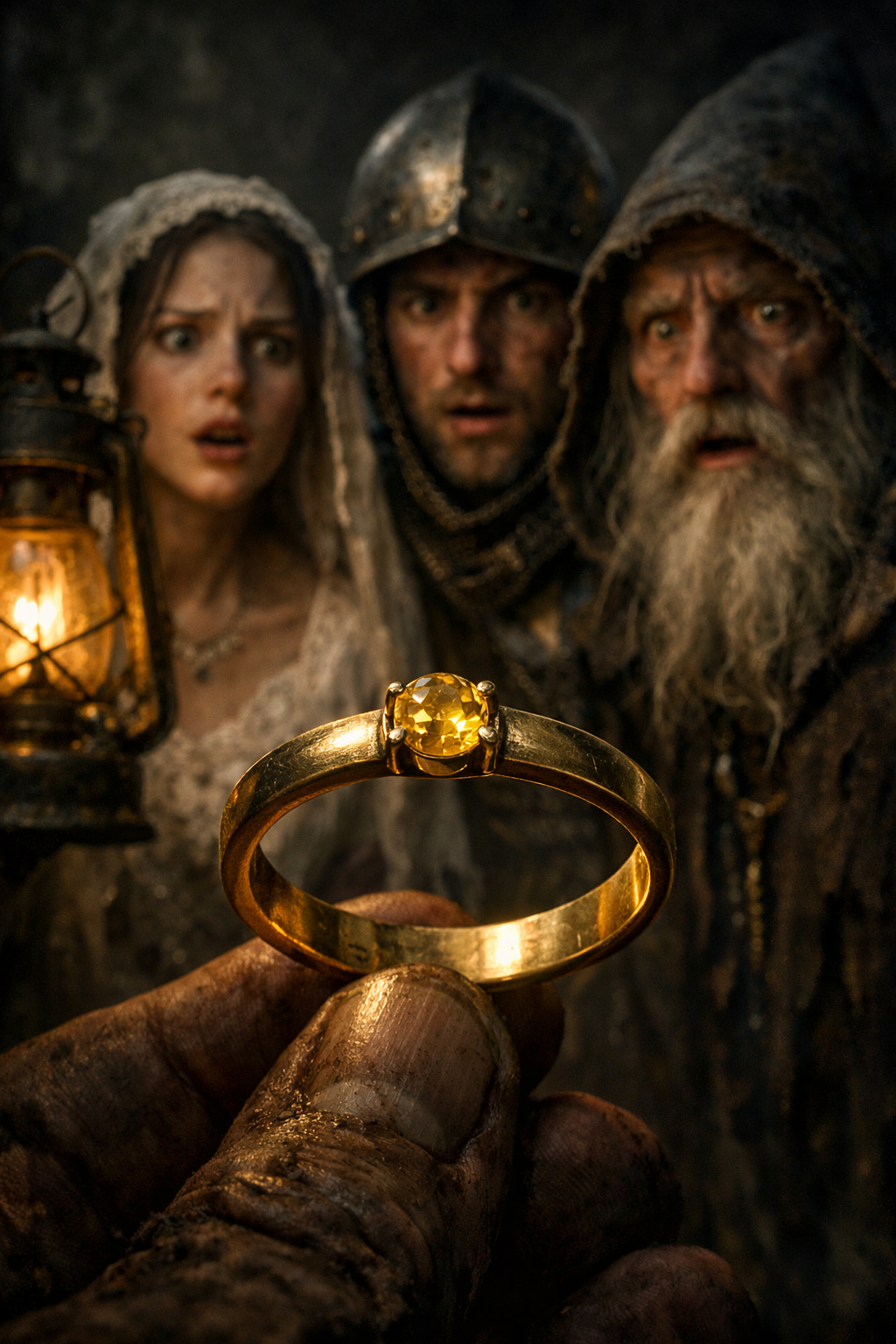
I have made this argument at greater length elsewhere on the Dark Hearth, in a piece on dark fantasy without blood and misery. My story The Yellowstone Ring is the same idea in fiction. It spends its whole length inside a plain gold band passed from a failing marriage to a drowned soldier to a widow, and the dread comes entirely from what the ring quietly notices across a lifetime of hands.
How to write dark fantasy
If you want to write dark fantasy, begin with cost.
Ask what magic demands. Ask who benefits from the kingdom’s laws. Ask what the church, the court, the village or the family refuses to admit. Ask what happened long ago that no one wants remembered.
Then build the story around consequences.
A dark fantasy plot does not need endless battles. It needs pressure. A curse tightens. A bargain comes due. A character makes a choice that cannot be unmade. The world reveals that its wonders were never free.
The best dark fantasy also needs contrast. If everything is grim all the time, the reader becomes numb. Give the story moments of warmth, beauty, loyalty, humour or tenderness. Then let the darkness threaten those things. Readers must feel there is something worth losing.
Most importantly, make the supernatural meaningful. A monster should express a fear, a sin, a hunger or a truth. A curse should fit the wrong that caused it. A haunted place should be haunted by more than decoration. The dark elements should grow from the story’s moral soil.
Dark fantasy story ideas
A village healer can cure any wound, but every life she saves appears later as a face in the bark of the oldest tree.
A prince murders the traitor who rang a warning bell for the people. Years later, the bell rings every night by itself, until one night it stops.
A saint’s bones protect a city from demons, but the saint is still conscious and has begun begging to be burned.
A knight returns from the underworld with the queen’s soul, but something else has learned to speak with her voice.
A child is blessed by seven godparents, and each blessing becomes a curse when taken too literally.
I should be honest, this one is not hypothetical. I have written it, as The Seven Blessings of Cecily Scratcher.
A mapmaker discovers that one forest has been moving closer to the capital each year, and all the villages it passes through still appear on the map, though no road can reach them.
The heart of dark fantasy
Dark fantasy endures because it remembers something old about storytelling.
The enchanted world was never only bright. The forest was never only beautiful. The fairy gift was never only generous. The dead were never entirely silent. The hero was never guaranteed to remain clean.
Dark fantasy gives us magic with a shadow behind it. It lets us walk through cursed kingdoms, haunted woods and ruined chapels, not because we want despair, but because we want wonder with weight.
At its best, dark fantasy does not merely ask whether the hero can defeat the monster.
It asks what made the monster, what the hero must become to face it, and whether the world can ever be innocent again.
If you'd like to follow Jonathan B. Edvane, you can do so here.
Discussion